Girls research
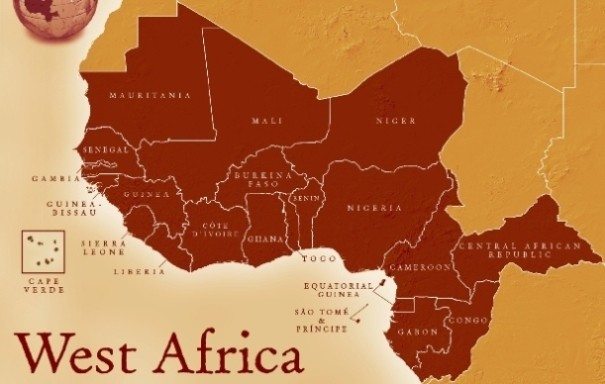
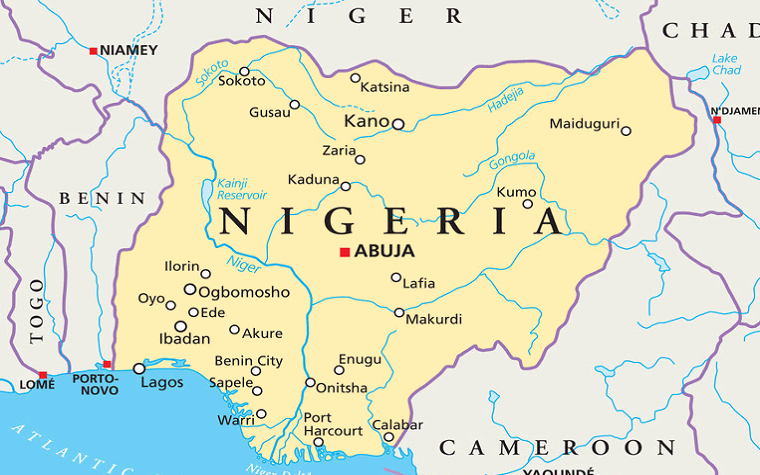
Girls is a play inspired by true events following Boko Haram that occurred in Nigeria. Nigeria is a country located in West Africa. Nigeria is religiously diverse, Islam and Christianity being the top two that are the most popular. Islam takes up 50% of religion in Nigeria, Christianity takes up 40%, leaving 10% to other religions. Nigeria has the largest Muslim population in the sub-Saharan African region.
Social Issues
Human rights in Nigeria
Nigeria's Human rights appear to remain poor. According to the US Department of state, the most serious human rights Issues are:
Stories and myths
Mama water ( Mermaids)
This is a myth I am familiar with, that Mama water a creature that usually lives in large bodies of water, would lure men with their deceptive looks and eat them. People would try to satisfy the needs of the creature by throwing severed heads of the goats into the water to stop them from craving human blood.
Whistling myth
it is said in West African countries, including Nigeria that whistling at night is calling out to evil spirits and inviting them to your home. there have been cases where people have claimed to whistle at night and snakes, cult members or evil spirits bothered their household that same night.
Pregnant women
There's a myth in Nigeria the pregnant women should not walk around during certain times of the day because evil spirits/demons could replace the baby. Haleema refers to Ruhab's growing baby as a demon because the baby's father is a 'demon'. she encourages Ruhab to get rid of it by trying to scare her with thoughts like those.
myths can be used to create fear, when fear is instilled in people they can then be controlled or directed, for example, the whistling myth spoken about before may have been created so that children do not whistle at home and annoy their parents with unwanted noise. This also links to the play, in Scene 3 where the girls have been captured by Boko Haram and are now in a camp, the girls talk about how they prefer the forest rather than the camp 'it was quieter. Or I liked the sounds', 'i guess it was familiar'. Which then reminds the girls of a myth of a giant called Womba, who resides in the forest and when a war broke out it angered him so much that he 'burst into a ball of fire', and if any kin doc war were to break out again near or in the forest, he would 'set ablaze every tree, bush and shrub, until the world is one big ball of fire'. A myth like that induces fear of being set on fire by a giant, which then helps to prevent wars in the forest(s).
Witches
In the western world today, being labelled as a witch doesn't happen often, in fact, people identify themselves with this term, as they practice natural remedies and spells, astrology, gems and more. In Nigeria this word is not to be taken lightly, the word is more like a curse there, if an individual were to be branded with this term, it will affect their life heavily. In the Nigerian state of Akwa Ibom, around 15,000 children were branded as witches and therefore abandoned and abused on the streets.
Food
In 'Girls', the girls are able to continue surviving from eating Garri, cassava that is peeled and then mashed, it is usually eaten with palm oil or if not the mash is then placed in a press machine for one to three hours to remove in excess water that came from the vegetable. it is then dry enough to be sieved into tiny grains and can be fried or made into flour. The girls eat it with palm oil, they don't have such tools to make the other kind of Garri dishes. Cassava also is known as Mandioca is a 'nutty flavoured, starch tuber in the spurge family of plants'. It's originally from the South American forests. When raw, it is crunchy, sweet. When fried, it's texture is similar to a potato and is classified as a vegetable. they sort through the Garri to make sure they are able to pick out all the bugs that have infested them. Garri is given to the girls because it's not worth much. It's food the poor usually eats, the girls, however, are familiar with it because, despite the fact that this food is usually eaten by the poor, it is still a well-known and traditional dish. Examples in London are 'Bangers and mash' and fish/chicken and chips, porridge, or toast. it's all well-known throughout the nation but not eaten frequently by the Elites and upper middle classes.
Many Nigerian dishes use spices, palm oil, and herbs to create a consistent deep flavour.
Below (2) is an image of palm tree oil, the left is made from the pulp of the fruit and on the right is from the kernel of the fruit.
Boko Haram
Violent protests by Muslims in the North broke out in 2002, forcing the 2002 Miss World pageant to be moved from Abuja to London. This left 100+ people dead and over 500 injured. The cause for these riots was sparked when certain comments were made by a newspaper reporter. since then, the country has suffered the violence of Boko Haram, an Islamist movement that seeks to overthrow/Abolish the Nigerian government and establish Shari'a law in the country. In 2010, the Jos riots took more than 500 lives due to Muslim, religious violence. In 2014 it has been reported by the president Goodluck Jonathon that attacks have left at least 12,000 dead and 8,000 crippled.
On 14-15 April 2014, Chibok, 276 female students were kidnapped from the government secondary school in the town of Chibok in Borno state. Boko Haram, an extremist terrorist organisation based northeast of Nigeria was responsible for this. 57 of the school girls managed to escape over the next few months. There were cases of pregnancy.

https://www.youtube.com/watch?v=jiaFQB6t5tE
https://www.youtube.com/watch?v=Bvfj-G3zdOA
https://www.youtube.com/watch?v=RJvh42OqWgw
https://www.youtube.com/watch?v=1kimbo5c0Ak
https://www.youtube.com/watch?v=9wlEDMmX51g
https://www.youtube.com/watch?v=j0qj-dps1e0
https://www.youtube.com/watch?v=zIGLuT04Vjc
https://www.youtube.com/watch?v=EnkJSntktBQ
Results of Boko haram
Teen/young pregnancy
Some girls were made wives and mothers from an early age, Many may not survive child labour due to their bodies not being prepared for childbirth, being that they are still developing and not having professional help or the equipment, it makes it a 50% of survival. I believe Ruhab would not have survived childbirth. She had a miscarriage, due to either malnutrition, stress, or her body was not able to sustain life like that yet.
 Many girls who are kidnapped in Africa are sold and taken advantage of. As a result of that, Many young girls are impregnated. The poor conditions and torture they are forced to endure causes miscarriages, infection and death.
PTSD
PTSD stands for Post Traumatic Stress Disorder and it affects all the girls, some more than others. My character, for example, Tisana is unable to deal with all those feelings that she becomes mentally unstable, you can see this from how she interacts with her dead friends, she talks to them as if they are still alive, creating delusions. 'Ta da!.... Okay enough looking at yourself Miss World time to eat!'. PTSD can be caused by many big events like accidents and events such as this one or 9/11.
Before the play has begun and the scene has been set, Boko Haram has begun, homes have been burned down and families slaughtered. The girls have run into the forest to flee the danger. They have run so much that they don't know where they are in the forest. This story follows three girls suffering through the events of Boko haram. This story shows their sisterhood, hope and struggles as they try to find a way to survive by their own means whether that means escaping, becoming one of them and accepting or simply losing your mind.
Theresa Ikoko is an award-winning British playwright of Nigerian descent. She grew up in Hackney London poor but describes it as 'Rich in Joy'. Her earlier works are The Race Card (2013), Normal (2014) and Visiting Hours (2014). She has won 2/3 Awards for Girls: The Alfred Fagon Award for the Best new play in 2015 and BBC 4 playwright Scheme in 2016.
Tisana
Tisana is a young girl in her very early teens (12-13) who have been involved in a very tragic situation involving two of her friends and 200+ girls. This character is naive and is probably the definition of the quote ' ignorance is bliss'. she is a very pure soul and believes in others too much. One thing I noticed is how she appears like the baby that everyone feels they need to protect her. But she may be the one who fights for what she believes in. She refuses to pray to a different God just because the enemy said and threatened so.
Tisana’s character annoys me the most, she is super naive and worries about things that shouldn’t even matter during events such as this one. I cannot ignore that I can relate to her because, in a way she is like me, she cares too much. She spends her time thinking about whether the school is back on or if her father (The pastor) would be ashamed of her new scars, which should be the least of her problems.
Her name means Tea in Italian. Her name may have originated from the name Tiana, which translates to 'Princess' in Latin and Russian.
She is from a full home, living with her mother, father, brothers and sisters, she is possibly the middle or the youngest child by the way she appears so naive and child-like. From analysing the script I thought about how she would move and I think even though she is going through a tragic experience, I feel that she is hopeful, also she is still considered an innocent child, so she would walk around youthfully. The facial expressions I think I should practice for Tisana are shocked, surprise and happiness (bright). When she isn't saying any line i thin she should look dazed, she always asks quite random questions, so a thought process on how she got to the questions should be projected on my face. Haleema's thoughts on Tisana are that she believes she is brave and that she is strong enough to stand up for her beliefs. Ruhab thinks of Tisana as kind and enjoys when she does her hair. she also likes that Tisana doesn't argue with them.
Ruhab ~
Ruhab is the oldest, she has a lot of experience and finds herself explaining to the others what sex is like. She cares for her appearance which others may see as vain, but that’s the only thing she has control of in her life, so she would rather focus on that and use it to her advantage, like becoming a wife to one of the Boko Haram members. Not shallow, Smart.
Ruhab has a miscarriage in this story. In Islam, it is said that the babies you have lost will drag you from hell ( if you are a sinner) by their umbilical cords.
Her name is an indirect Quranic for boys and girls that signifies 'forbearing', 'open-minded'. 'generous', 'spacious'. Haleema and Tisana would describe Ruhab as Vain, Motherly, friendly and reckless.
Haleema ~
حليمة
The feisty one of the group. She knows what she wants, she has a goal, she wants out and doesn't stop trying to find a way out. Haleema (Halle) is the toughest girl in this play. She values herself too much to allow herself to stay and suffer at the hands of the enemy. She seems like the coldest but it’s clear she cares, she is the kindest also but feels like showing emotions makes her appear weak, she is just unable to express it well.

Accents were discussed and brought up, however, we failed terribly and hilariously, it would be better to stick to our own accents rather than create a cringe-worthy performance. it would take away from it.
Costumes have been spoken about and I decided that I wanted my character to wear a purple shirt to show some sense of youth and playfulness. I also wanted to wear 3/4 length shorts to communicate that it's hot where my character is. However, the girls have decided on a white shirt with a white vest under and black leggings. I wasn't too pleased with this decision because that's not what everyone in Africa wears typically, it's easy to manoeuvre in and the white shirts help to show our fake blood. On the vest I would wear as Tisana it is covered in blood as she whipped for not praying to Allah, I reveal this in scene 13 where I am dancing. I conceal the vest for the first part of the play with the white top over it. Here some initial ideas I had (below).


Being that these girls are young and go to school, we decided makeup shouldn't be used on any of us. Also being of African culture, I've noticed in hotter places like Africa, make up such as foundation isn't used as much as the western countries, I think it's because their skin most of the time appears healthy due to the climate.
Hair
In order to capture the true sense of African culture and beauty, it has been discussed that we wear our natural hair out. As black girls, our hair plays a big part in our identity. Today I may wear box braids, tomorrow I may slick it back in a bun or slap on a wig if I’m feeling frisky. I feel I’m different with different hairstyles, but I feel the most empowerment when I wear my hair as it is.
 This is a collage made to demonstrate all the different hairstyles I wear, above is a collage of different braids, and cornrow hairstyles worn by me.


Afro Hair, worn by African-American actresses.



Above is one of our initial ideas for the props and tech.
 Jaychelle purchased fake blood and blood capsules on Amazon, the issue, however, was that adding fake blood during the performance would be a challenge because we are rarely ever off stage. We instead added blood beforehand on the vest underneath for Tisana. For Ruhab's miscarriage we filled a condom with fake blood, we tried to tie it and poke it with a needle, but the blood wouldn't leak even when squeezed, so we settled for leaving it open in cloth that the audience can't see so when the scene happens the blood is able to go on her hands with no issue.


Songs we're looking at:
Ms Celie's Blues (sisters) - the colour purple
https://www.youtube.com/watch?v=eK3URAH760w
This song is from the movie the colour purple, the two characters aren't actually sisters but this term is used in African (American) and Islamic culture where they refer to other black or Muslims as brother or sister. The terms popular in London African culture is referring to an African elder you don't know as uncle or auntie.
Western African traditional music-
https://www.youtube.com/watch?v=B9baR_Ks1ps
https://www.youtube.com/watch?v=W05LPtVm5hY
I was born by the river- https://www.youtube.com/watch?v=wEBlaMOmKV4
Super Mama Djombo
This a band from Guinea Bissau a west African country I am from, I offered some song ideas like these, these songs are very traditional in the instruments used.
Cabanca Djombo - https://www.youtube.com/watch?v=Ww4mEwTQAf0
Faibe Guine - https://www.youtube.com/watch?v=GGE9X-t7HlA
Sade-
I enjoy Sade's music, she is a British and Nigerian soul singer. Some of her songs have an exotic African sound, so I thought it may be an option some of her songs speak about Africa, mostly love, and the song 'Jezebel' is about a powerful young and beautiful woman who will do what she needs to in order to get what she wants, it reminded me of Ruhab's character. She becomes a wife to one of the soldiers to survive.
sweetest Taboo,- https://www.youtube.com/watch?v=kcPc18SG6uA
Pearls - https://www.youtube.com/watch?v=VaajVLzS170
King of sorrow - https://www.youtube.com/watch?v=nF7yuNg_zWE
In another time - https://www.youtube.com/watch?v=d2s0XdFj0xU
Jezebel.- https://www.youtube.com/watch?v=_qTsxMS2PpA
The power of 'three' or repetition, Disney's tactic with music in movies
https://www.youtube.com/watch?v=i8HePfa7WYs
https://www.youtube.com/watch?v=v7f52aFiXZI
I've noticed many Disney films sound and music is memorable, this is because they use a song or orchestral sound in the beginning, middle and end of the film, and when they do this they link different emotions to them. Such as the Lion King, 'The kings of the past' is the song used when Simba and Mufasa connect, it is also used when Simba's father passes, and in other parts of the film to create emotion and a connection. We want to use that also to connect with the audience.
We would start our lessons with our teacher or sometimes just ourselves, taking us through a warm-up, we would stretch our body parts, Inhale and exhale, and get our blood pumping, this wakes up the mind and body. We then do voice warm-ups that consist of humming in different pitches, and moving whilst doing that. Afterwards, we focus on diction and articulation, by doing some tongue twisters such as 'she sells seashells on the seashore' and 'Unique, New York, New York, unique' and we go around saying it individually to make sure everyone is able to say properly.
In one lesson with everyone, I was paired with Jeremy, we were told to speak to each other in our given character and get to know each other's character that way. And then we would perform it to the class. Mine and Jeremy's character are both Nigerian, however, his character grew up in Hackney, we were able to create this dynamic between a strange young and highly religious girl and a seriously stressed playwright.
Feedback 27th Feb
Feedback from peers on scenes 1 and 2 of Girls
Molly said that I need to make sure I'm not being blocked by Georgina when i'm doing her hair. Ways I can fix that is by either standing or turning slightly diagonal so the audience is able to see us both. Gabriel said that you can tell which kind of character we are by our actions and how we say our lines. Brad said that jaychelle acting disinterested as her character on the side shows her personality type.

13th March
Our play is a running time of 1 hour and 30 minutes, and we have been given a maximum running time of 2 hours including interval on the night including Jeremy's show which is 45 minutes. We felt that every scene held important information so instead of getting rid of whole scenes we cut lines and conversations that we felt wasn't contributing to the story as much as the others. We have also merged scenes that don't include any lines and just actions.
24th April
Our feedback given today based on the first half of our play is that our characters overall were good and well thought-out, it's just the energy that needs to be higher. We were told to not break character AKA corpsing as it is the worst thing you could do, even if someone messes up their lines, improvise, try your best to pick it up and find your way around it because on the day you cannot tell the person 'oh no that's your line'.
My individual feedback from my peer is that I have very good reacting skills, I just need to focus on projecting outwards to the universe and not at Jaychelle and Georgina.
Today we blocked every scene until scene 12 which is known as the fight scene. We've basically learnt all the lines as a collective. We've been able to prioritize learning the lines in order to get the play up on its feet. What we want to work on from here is create a more realistic reaction, so that means no waiting for cues to come, cut each other off, because that's real life, it's more natural.
We discussed having more energy and more raw emotion. We want to avoid looking down all the time in order to able to engage with the audience. With longer monologues, we have agreed that we should be listening and reacting off of what is being said. In one day we were able to do half of it, so we were in good spirits because of that.
The next week we are planning on bringing scarves that can be used as a headscarf, and some clothing. We plan on bringing or finding a plain blanket for the sleeping scenes. We need black cloth, and we are positive that we will find them in the prop room. Lines should be crisp by tomorrow. Next week we plan on doing a quick run through where we are unable to make mistakes otherwise we must start over from the top.
30th April
Today we had the idea of including some physical movement. We really enjoyed our Donmar piece from last year February, where physical theatre played a big part in the show and you must be focused and in tune with yourself but mostly with your ensemble in order for it to work. It did, and that's why it's a majority of my classes favourite performance. We agreed on adding a physical movement piece in the many scenes without lines, where we are showing the passing of time. We each took in turns to express through movement what our character is feeling and our feedback was great. Jeremy our peer stated how moved he was from that and that by just adding music it would be great.
2nd May
Based on the whole play my teacher believed it to be excellent, she thought that the relationships between the characters were really strong in the sense of the danger that we were in. What she wondered, however, was how different the girls are and what their backstory is, because it is hinted that we know each other and we know mutual people such as uncles. She wants us to bring forward our biography we wrote for our characters, to really showcase how different these girls are. She advised that we discuss sound effects such as the rain with the tech team. She also wanted us to use the Stanislavski method by asking ourselves before each scene 'where was I before this?' so you've got a feel of what happened before you were on stage. Things are mentioned in the play that technically doesn't happen onstage such as the new girls coming, the long ride to the camp, and their labour work in the forest and the farm so it's good to remember that and layer it in order to give the audience a real sense of where you are. She also told us to polish the last scene because that is the part that the audience see last and they take it with them.
As there are scenes in the play where there are outbursts of anger and cries, we've been training to cry and strip away that embarrassment of thinking 'do I look ugly'- it has to be ugly because sadness, anger and frustration is not pretty, we have to realise that in acting that we have to show the ugly side of us, not the artificial and that's what your training to do as a group independently, giving each other feedback; what we think the other should do and how to do it and I think I was able to do that and so were my peers.
14th May
We were able to time our performance and it was 1 hour and 10minutes, we were quite happy because we had paused a few times throughout so we knew that our show would be short enough when ran fluidly.
As Tisana, a theory I created was that the reasons the scenes of her doing Ru's hair is repeated often are due to a creepy fact that she is losing her mind and she's been constantly re-living these events, that it may make you question how long has it been since this happened. Another clue to this can be in the end scene their bowls are filled so so much with Garri it's overflowing, she keeps serving them day after day. They may have been dead for a longer time than it seems.
Final performance video:
https://www.youtube.com/watch?v=-ht2khlzl14&feature=youtu.be
Powerpoint proposal:
https://docs.google.com/presentation/d/1puGbBEMlHsLA_-Rjgu7R2Q_4ELM5wkFlNXe-z6bFg08/edit#slide=id.g13c6216ea3_0_964
Create survey for performance
talk about jesus hopped the a train - (traverse stage)
links to research:
https://www.theguardian.com/world/2014/may/10/michelle-obama-nigeria-presidential-address
https://www.theguardian.com/world/2014/may/12/boko-haram-free-kidnapped-schoolgirls-exchange-prisoners
https://www.bbc.co.uk/news/topics/c50znx8v435t/boko-haram
https://www.theguardian.com/world/video/2014/may/12/nigeria-kidnapped-girls-boko-haram-video
https://www.theguardian.com/world/2014/apr/15/schoolgirls-kidnapped-suspected-islamists-nigeria
https://www.theguardian.com/world/2014/apr/17/nigerian-students-headteacher-kidnapped-schoolgirls-army-freed
https://www.theguardian.com/commentisfree/2014/apr/23/200-girls-missing-nigeria-care-sewol-tragedy
https://www.theguardian.com/world/2014/apr/28/nigeria-why-are-we-sleeping-easy-when-terrorists-have-kidnapped-our-children
https://edition.cnn.com/2014/06/09/world/boko-haram-fast-facts/index.html
PASTE THES LINKS TO PROPOSAL
feedback from xmas carol
source-
https://www.bbc.co.uk/news/av/world-africa-27048076/nigeria-s-boko-haram-group-explained-in-60-seconds
https://en.wikipedia.org/wiki/Nigeria#Religion
https://en.wikipedia.org/wiki/Chibok_schoolgirls_kidnapping
http://quranicnames.com/ruhab/
https://www.thebump.com/b/tiana-baby-name
https://en.wikipedia.org/wiki/Halima
https://en.wikipedia.org/wiki/Garri
https://www.nutrition-and-you.com/cassava.html
https://en.wikipedia.org/wiki/Nigerian_cuisine
https://fairytalez.com/region/nigerian/
https://www.youtube.com/watch?v=_IYtTJMVKI8 : Top 10 Nigerian urban legends
![Image result for national church abuja]](https://c1.staticflickr.com/4/3077/2315587846_521d2f1a66_b.jpg) |
| National Chruch of Nigeria, Abuja |
 |
| National Mosque, Abuja |
Tribes
There are different ethnic groups and tribes in Nigeria, Hausa is an ethnic group that is predominantly in the north, 95% of this tribe are Muslim and the remaining 5% are Christians. The Yoruba tribe are mainly located in the west, 55% are Muslim, 35% Christian and 10% are other religions. Igbos ( East) and Ijaw tribe(South) were 98% Christian and 2% practice traditional religions.
Social Issues
Human rights in Nigeria
Nigeria's Human rights appear to remain poor. According to the US Department of state, the most serious human rights Issues are:
- Us of excessive force by security forces
- Exceptions for abuses by security forces
- Unreasonable arrests
- Prolonged pretrial detention
- Rape
- Torture & Cruelty
- Inhuman treatment for prisoners
- Human trafficking for prostitution and forced labour
- Child labour
- Child abuse and child sexual exploitation
- discrimination based on ethnicity, religion and region.
Shari'a's penal code that applies to a majority of Muslims states that if any offences are made (Homosexuality, alcohol consumption, infidelity and theft), then they (the offenders) must carry out a very harsh sentence that includes amputation, lashing, stoning and long prison terms.
 |
| Yoruba People |
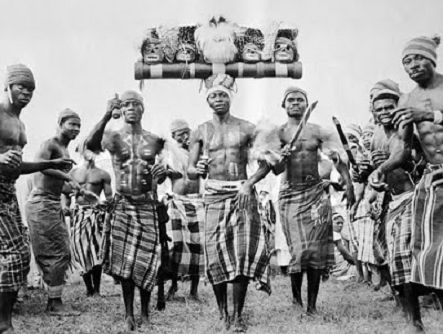 |
| Igbo Tribe |
Stories and myths
Mama water ( Mermaids)
This is a myth I am familiar with, that Mama water a creature that usually lives in large bodies of water, would lure men with their deceptive looks and eat them. People would try to satisfy the needs of the creature by throwing severed heads of the goats into the water to stop them from craving human blood.
Whistling myth
it is said in West African countries, including Nigeria that whistling at night is calling out to evil spirits and inviting them to your home. there have been cases where people have claimed to whistle at night and snakes, cult members or evil spirits bothered their household that same night.
Pregnant women
There's a myth in Nigeria the pregnant women should not walk around during certain times of the day because evil spirits/demons could replace the baby. Haleema refers to Ruhab's growing baby as a demon because the baby's father is a 'demon'. she encourages Ruhab to get rid of it by trying to scare her with thoughts like those.
myths can be used to create fear, when fear is instilled in people they can then be controlled or directed, for example, the whistling myth spoken about before may have been created so that children do not whistle at home and annoy their parents with unwanted noise. This also links to the play, in Scene 3 where the girls have been captured by Boko Haram and are now in a camp, the girls talk about how they prefer the forest rather than the camp 'it was quieter. Or I liked the sounds', 'i guess it was familiar'. Which then reminds the girls of a myth of a giant called Womba, who resides in the forest and when a war broke out it angered him so much that he 'burst into a ball of fire', and if any kin doc war were to break out again near or in the forest, he would 'set ablaze every tree, bush and shrub, until the world is one big ball of fire'. A myth like that induces fear of being set on fire by a giant, which then helps to prevent wars in the forest(s).
Witches
In the western world today, being labelled as a witch doesn't happen often, in fact, people identify themselves with this term, as they practice natural remedies and spells, astrology, gems and more. In Nigeria this word is not to be taken lightly, the word is more like a curse there, if an individual were to be branded with this term, it will affect their life heavily. In the Nigerian state of Akwa Ibom, around 15,000 children were branded as witches and therefore abandoned and abused on the streets.
Food
In 'Girls', the girls are able to continue surviving from eating Garri, cassava that is peeled and then mashed, it is usually eaten with palm oil or if not the mash is then placed in a press machine for one to three hours to remove in excess water that came from the vegetable. it is then dry enough to be sieved into tiny grains and can be fried or made into flour. The girls eat it with palm oil, they don't have such tools to make the other kind of Garri dishes. Cassava also is known as Mandioca is a 'nutty flavoured, starch tuber in the spurge family of plants'. It's originally from the South American forests. When raw, it is crunchy, sweet. When fried, it's texture is similar to a potato and is classified as a vegetable. they sort through the Garri to make sure they are able to pick out all the bugs that have infested them. Garri is given to the girls because it's not worth much. It's food the poor usually eats, the girls, however, are familiar with it because, despite the fact that this food is usually eaten by the poor, it is still a well-known and traditional dish. Examples in London are 'Bangers and mash' and fish/chicken and chips, porridge, or toast. it's all well-known throughout the nation but not eaten frequently by the Elites and upper middle classes.
Many Nigerian dishes use spices, palm oil, and herbs to create a consistent deep flavour.
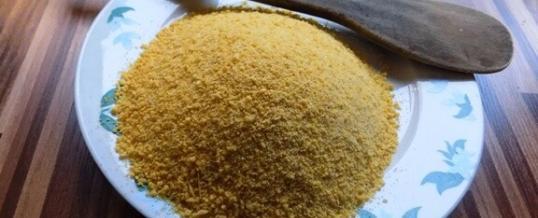 |
| Garri |
 |
| Dodo, Fried Plantain |
 |
| Palm oil (2) |
 |
| pounded yam and Egusi soup |
Boko Haram
Girls is a story inspired by true events that happened as recent as 2014. This unfortunate and devastating event is Boko Haram. Boko Haram is an Islamic group in Nigeria that was founded in 2002. Their goal is to essentially overthrow the Nigerian government and create an Islamic state. The group has caused chaos with violence through the use of weaponry. They are very much responsible for the abduction of 200+ school girls
Boko Haram means:
‘WESTERN EDUCATION IS FORBIDDEN’
Violent protests by Muslims in the North broke out in 2002, forcing the 2002 Miss World pageant to be moved from Abuja to London. This left 100+ people dead and over 500 injured. The cause for these riots was sparked when certain comments were made by a newspaper reporter. since then, the country has suffered the violence of Boko Haram, an Islamist movement that seeks to overthrow/Abolish the Nigerian government and establish Shari'a law in the country. In 2010, the Jos riots took more than 500 lives due to Muslim, religious violence. In 2014 it has been reported by the president Goodluck Jonathon that attacks have left at least 12,000 dead and 8,000 crippled.
On 14-15 April 2014, Chibok, 276 female students were kidnapped from the government secondary school in the town of Chibok in Borno state. Boko Haram, an extremist terrorist organisation based northeast of Nigeria was responsible for this. 57 of the school girls managed to escape over the next few months. There were cases of pregnancy.
https://www.youtube.com/watch?v=jiaFQB6t5tE
https://www.youtube.com/watch?v=Bvfj-G3zdOA
https://www.youtube.com/watch?v=RJvh42OqWgw
https://www.youtube.com/watch?v=1kimbo5c0Ak
https://www.youtube.com/watch?v=9wlEDMmX51g
https://www.youtube.com/watch?v=j0qj-dps1e0
https://www.youtube.com/watch?v=zIGLuT04Vjc
https://www.youtube.com/watch?v=EnkJSntktBQ
Results of Boko haram
Teen/young pregnancy
Some girls were made wives and mothers from an early age, Many may not survive child labour due to their bodies not being prepared for childbirth, being that they are still developing and not having professional help or the equipment, it makes it a 50% of survival. I believe Ruhab would not have survived childbirth. She had a miscarriage, due to either malnutrition, stress, or her body was not able to sustain life like that yet.
Many girls who are kidnapped in Africa are sold and taken advantage of. As a result of that, Many young girls are impregnated. The poor conditions and torture they are forced to endure causes miscarriages, infection and death.PTSD
PTSD stands for Post Traumatic Stress Disorder and it affects all the girls, some more than others. My character, for example, Tisana is unable to deal with all those feelings that she becomes mentally unstable, you can see this from how she interacts with her dead friends, she talks to them as if they are still alive, creating delusions. 'Ta da!.... Okay enough looking at yourself Miss World time to eat!'. PTSD can be caused by many big events like accidents and events such as this one or 9/11.
 |
| Girls |
Before the play has begun and the scene has been set, Boko Haram has begun, homes have been burned down and families slaughtered. The girls have run into the forest to flee the danger. They have run so much that they don't know where they are in the forest. This story follows three girls suffering through the events of Boko haram. This story shows their sisterhood, hope and struggles as they try to find a way to survive by their own means whether that means escaping, becoming one of them and accepting or simply losing your mind.
 |
| Theresa Ikoko |
Theresa Ikoko is an award-winning British playwright of Nigerian descent. She grew up in Hackney London poor but describes it as 'Rich in Joy'. Her earlier works are The Race Card (2013), Normal (2014) and Visiting Hours (2014). She has won 2/3 Awards for Girls: The Alfred Fagon Award for the Best new play in 2015 and BBC 4 playwright Scheme in 2016.
Tisana
Tisana is a young girl in her very early teens (12-13) who have been involved in a very tragic situation involving two of her friends and 200+ girls. This character is naive and is probably the definition of the quote ' ignorance is bliss'. she is a very pure soul and believes in others too much. One thing I noticed is how she appears like the baby that everyone feels they need to protect her. But she may be the one who fights for what she believes in. She refuses to pray to a different God just because the enemy said and threatened so.
Tisana’s character annoys me the most, she is super naive and worries about things that shouldn’t even matter during events such as this one. I cannot ignore that I can relate to her because, in a way she is like me, she cares too much. She spends her time thinking about whether the school is back on or if her father (The pastor) would be ashamed of her new scars, which should be the least of her problems.
Her name means Tea in Italian. Her name may have originated from the name Tiana, which translates to 'Princess' in Latin and Russian.
She is from a full home, living with her mother, father, brothers and sisters, she is possibly the middle or the youngest child by the way she appears so naive and child-like. From analysing the script I thought about how she would move and I think even though she is going through a tragic experience, I feel that she is hopeful, also she is still considered an innocent child, so she would walk around youthfully. The facial expressions I think I should practice for Tisana are shocked, surprise and happiness (bright). When she isn't saying any line i thin she should look dazed, she always asks quite random questions, so a thought process on how she got to the questions should be projected on my face. Haleema's thoughts on Tisana are that she believes she is brave and that she is strong enough to stand up for her beliefs. Ruhab thinks of Tisana as kind and enjoys when she does her hair. she also likes that Tisana doesn't argue with them.
Ruhab ~
| رُحاب |
Ruhab has a miscarriage in this story. In Islam, it is said that the babies you have lost will drag you from hell ( if you are a sinner) by their umbilical cords.
Her name is an indirect Quranic for boys and girls that signifies 'forbearing', 'open-minded'. 'generous', 'spacious'. Haleema and Tisana would describe Ruhab as Vain, Motherly, friendly and reckless.
Haleema ~
حليمة
The feisty one of the group. She knows what she wants, she has a goal, she wants out and doesn't stop trying to find a way out. Haleema (Halle) is the toughest girl in this play. She values herself too much to allow herself to stay and suffer at the hands of the enemy. She seems like the coldest but it’s clear she cares, she is the kindest also but feels like showing emotions makes her appear weak, she is just unable to express it well.
Her name is of Arabic origin which means 'gentle', 'mild-mannered' and 'generous'. Ruhab and Tisana would describe Haleema as Feisty, blunt, mean and protective.
Accents were discussed and brought up, however, we failed terribly and hilariously, it would be better to stick to our own accents rather than create a cringe-worthy performance. it would take away from it.
Costumes have been spoken about and I decided that I wanted my character to wear a purple shirt to show some sense of youth and playfulness. I also wanted to wear 3/4 length shorts to communicate that it's hot where my character is. However, the girls have decided on a white shirt with a white vest under and black leggings. I wasn't too pleased with this decision because that's not what everyone in Africa wears typically, it's easy to manoeuvre in and the white shirts help to show our fake blood. On the vest I would wear as Tisana it is covered in blood as she whipped for not praying to Allah, I reveal this in scene 13 where I am dancing. I conceal the vest for the first part of the play with the white top over it. Here some initial ideas I had (below).


Being that these girls are young and go to school, we decided makeup shouldn't be used on any of us. Also being of African culture, I've noticed in hotter places like Africa, make up such as foundation isn't used as much as the western countries, I think it's because their skin most of the time appears healthy due to the climate.
Hair
In order to capture the true sense of African culture and beauty, it has been discussed that we wear our natural hair out. As black girls, our hair plays a big part in our identity. Today I may wear box braids, tomorrow I may slick it back in a bun or slap on a wig if I’m feeling frisky. I feel I’m different with different hairstyles, but I feel the most empowerment when I wear my hair as it is.
 This is a collage made to demonstrate all the different hairstyles I wear, above is a collage of different braids, and cornrow hairstyles worn by me.
Afro Hair, worn by African-American actresses.
 |
| My hair styled as my usual day to day up-dos. |
 |
| Weave, Extensions and wigs |
 |
| my natural hair worn as an afro, wash n go or blow dried |
Me and the girls decided that we would wear our natural hair ( Afro possibly ) out to capture the true essence and feel of our roots, the audience will also be affected by our choice too because many black girls in the UK do not wear their hair out often due to many reasons, one being that the weather in the UK is not 'Afro-friendly'. I often wear my hair out on hot days or in hot countries as do African girls in their home countries. This allows us to set the scene just with our choice of hairstyling.
 |
| Girls, our poster, edited by Jeremy |
 |
| The programme, credits to Jeremy |
Here's what night and day set looked like:
 |
| Night set |
 |
| day set |
We decided that having a table with stools might be far fetched for a tent, it's not even a house, so we decided to use newspaper to create the illusion that the floor is dirt and the newspaper is used to keep us from touching it too much.


Above is one of our initial ideas for the props and tech.
 Jaychelle purchased fake blood and blood capsules on Amazon, the issue, however, was that adding fake blood during the performance would be a challenge because we are rarely ever off stage. We instead added blood beforehand on the vest underneath for Tisana. For Ruhab's miscarriage we filled a condom with fake blood, we tried to tie it and poke it with a needle, but the blood wouldn't leak even when squeezed, so we settled for leaving it open in cloth that the audience can't see so when the scene happens the blood is able to go on her hands with no issue.

Songs we're looking at:
Ms Celie's Blues (sisters) - the colour purple
https://www.youtube.com/watch?v=eK3URAH760w
This song is from the movie the colour purple, the two characters aren't actually sisters but this term is used in African (American) and Islamic culture where they refer to other black or Muslims as brother or sister. The terms popular in London African culture is referring to an African elder you don't know as uncle or auntie.
Western African traditional music-
https://www.youtube.com/watch?v=B9baR_Ks1ps
https://www.youtube.com/watch?v=W05LPtVm5hY
I was born by the river- https://www.youtube.com/watch?v=wEBlaMOmKV4
Super Mama Djombo
This a band from Guinea Bissau a west African country I am from, I offered some song ideas like these, these songs are very traditional in the instruments used.
Cabanca Djombo - https://www.youtube.com/watch?v=Ww4mEwTQAf0
Faibe Guine - https://www.youtube.com/watch?v=GGE9X-t7HlA
Sade-
I enjoy Sade's music, she is a British and Nigerian soul singer. Some of her songs have an exotic African sound, so I thought it may be an option some of her songs speak about Africa, mostly love, and the song 'Jezebel' is about a powerful young and beautiful woman who will do what she needs to in order to get what she wants, it reminded me of Ruhab's character. She becomes a wife to one of the soldiers to survive.
sweetest Taboo,- https://www.youtube.com/watch?v=kcPc18SG6uA
Pearls - https://www.youtube.com/watch?v=VaajVLzS170
King of sorrow - https://www.youtube.com/watch?v=nF7yuNg_zWE
In another time - https://www.youtube.com/watch?v=d2s0XdFj0xU
Jezebel.- https://www.youtube.com/watch?v=_qTsxMS2PpA
The power of 'three' or repetition, Disney's tactic with music in movies
https://www.youtube.com/watch?v=i8HePfa7WYs
https://www.youtube.com/watch?v=v7f52aFiXZI
I've noticed many Disney films sound and music is memorable, this is because they use a song or orchestral sound in the beginning, middle and end of the film, and when they do this they link different emotions to them. Such as the Lion King, 'The kings of the past' is the song used when Simba and Mufasa connect, it is also used when Simba's father passes, and in other parts of the film to create emotion and a connection. We want to use that also to connect with the audience.
We would start our lessons with our teacher or sometimes just ourselves, taking us through a warm-up, we would stretch our body parts, Inhale and exhale, and get our blood pumping, this wakes up the mind and body. We then do voice warm-ups that consist of humming in different pitches, and moving whilst doing that. Afterwards, we focus on diction and articulation, by doing some tongue twisters such as 'she sells seashells on the seashore' and 'Unique, New York, New York, unique' and we go around saying it individually to make sure everyone is able to say properly.
In one lesson with everyone, I was paired with Jeremy, we were told to speak to each other in our given character and get to know each other's character that way. And then we would perform it to the class. Mine and Jeremy's character are both Nigerian, however, his character grew up in Hackney, we were able to create this dynamic between a strange young and highly religious girl and a seriously stressed playwright.
Feedback 27th Feb
Feedback from peers on scenes 1 and 2 of Girls
Molly said that I need to make sure I'm not being blocked by Georgina when i'm doing her hair. Ways I can fix that is by either standing or turning slightly diagonal so the audience is able to see us both. Gabriel said that you can tell which kind of character we are by our actions and how we say our lines. Brad said that jaychelle acting disinterested as her character on the side shows her personality type.


13th March
Our play is a running time of 1 hour and 30 minutes, and we have been given a maximum running time of 2 hours including interval on the night including Jeremy's show which is 45 minutes. We felt that every scene held important information so instead of getting rid of whole scenes we cut lines and conversations that we felt wasn't contributing to the story as much as the others. We have also merged scenes that don't include any lines and just actions.
24th April
Our feedback given today based on the first half of our play is that our characters overall were good and well thought-out, it's just the energy that needs to be higher. We were told to not break character AKA corpsing as it is the worst thing you could do, even if someone messes up their lines, improvise, try your best to pick it up and find your way around it because on the day you cannot tell the person 'oh no that's your line'.
My individual feedback from my peer is that I have very good reacting skills, I just need to focus on projecting outwards to the universe and not at Jaychelle and Georgina.
Today we blocked every scene until scene 12 which is known as the fight scene. We've basically learnt all the lines as a collective. We've been able to prioritize learning the lines in order to get the play up on its feet. What we want to work on from here is create a more realistic reaction, so that means no waiting for cues to come, cut each other off, because that's real life, it's more natural.
We discussed having more energy and more raw emotion. We want to avoid looking down all the time in order to able to engage with the audience. With longer monologues, we have agreed that we should be listening and reacting off of what is being said. In one day we were able to do half of it, so we were in good spirits because of that.
The next week we are planning on bringing scarves that can be used as a headscarf, and some clothing. We plan on bringing or finding a plain blanket for the sleeping scenes. We need black cloth, and we are positive that we will find them in the prop room. Lines should be crisp by tomorrow. Next week we plan on doing a quick run through where we are unable to make mistakes otherwise we must start over from the top.
30th April
Today we had the idea of including some physical movement. We really enjoyed our Donmar piece from last year February, where physical theatre played a big part in the show and you must be focused and in tune with yourself but mostly with your ensemble in order for it to work. It did, and that's why it's a majority of my classes favourite performance. We agreed on adding a physical movement piece in the many scenes without lines, where we are showing the passing of time. We each took in turns to express through movement what our character is feeling and our feedback was great. Jeremy our peer stated how moved he was from that and that by just adding music it would be great.
2nd May
Based on the whole play my teacher believed it to be excellent, she thought that the relationships between the characters were really strong in the sense of the danger that we were in. What she wondered, however, was how different the girls are and what their backstory is, because it is hinted that we know each other and we know mutual people such as uncles. She wants us to bring forward our biography we wrote for our characters, to really showcase how different these girls are. She advised that we discuss sound effects such as the rain with the tech team. She also wanted us to use the Stanislavski method by asking ourselves before each scene 'where was I before this?' so you've got a feel of what happened before you were on stage. Things are mentioned in the play that technically doesn't happen onstage such as the new girls coming, the long ride to the camp, and their labour work in the forest and the farm so it's good to remember that and layer it in order to give the audience a real sense of where you are. She also told us to polish the last scene because that is the part that the audience see last and they take it with them.
As there are scenes in the play where there are outbursts of anger and cries, we've been training to cry and strip away that embarrassment of thinking 'do I look ugly'- it has to be ugly because sadness, anger and frustration is not pretty, we have to realise that in acting that we have to show the ugly side of us, not the artificial and that's what your training to do as a group independently, giving each other feedback; what we think the other should do and how to do it and I think I was able to do that and so were my peers.
14th May
We were able to time our performance and it was 1 hour and 10minutes, we were quite happy because we had paused a few times throughout so we knew that our show would be short enough when ran fluidly.
As Tisana, a theory I created was that the reasons the scenes of her doing Ru's hair is repeated often are due to a creepy fact that she is losing her mind and she's been constantly re-living these events, that it may make you question how long has it been since this happened. Another clue to this can be in the end scene their bowls are filled so so much with Garri it's overflowing, she keeps serving them day after day. They may have been dead for a longer time than it seems.
Final performance video:
https://www.youtube.com/watch?v=-ht2khlzl14&feature=youtu.be
Powerpoint proposal:
https://docs.google.com/presentation/d/1puGbBEMlHsLA_-Rjgu7R2Q_4ELM5wkFlNXe-z6bFg08/edit#slide=id.g13c6216ea3_0_964
Create survey for performance
talk about jesus hopped the a train - (traverse stage)
links to research:
https://www.theguardian.com/world/2014/may/10/michelle-obama-nigeria-presidential-address
https://www.theguardian.com/world/2014/may/12/boko-haram-free-kidnapped-schoolgirls-exchange-prisoners
https://www.bbc.co.uk/news/topics/c50znx8v435t/boko-haram
https://www.theguardian.com/world/video/2014/may/12/nigeria-kidnapped-girls-boko-haram-video
https://www.theguardian.com/world/2014/apr/15/schoolgirls-kidnapped-suspected-islamists-nigeria
https://www.theguardian.com/world/2014/apr/17/nigerian-students-headteacher-kidnapped-schoolgirls-army-freed
https://www.theguardian.com/commentisfree/2014/apr/23/200-girls-missing-nigeria-care-sewol-tragedy
https://www.theguardian.com/world/2014/apr/28/nigeria-why-are-we-sleeping-easy-when-terrorists-have-kidnapped-our-children
https://edition.cnn.com/2014/06/09/world/boko-haram-fast-facts/index.html
PASTE THES LINKS TO PROPOSAL
feedback from xmas carol
source-
https://www.bbc.co.uk/news/av/world-africa-27048076/nigeria-s-boko-haram-group-explained-in-60-seconds
https://en.wikipedia.org/wiki/Nigeria#Religion
https://en.wikipedia.org/wiki/Chibok_schoolgirls_kidnapping
http://quranicnames.com/ruhab/
https://www.thebump.com/b/tiana-baby-name
https://en.wikipedia.org/wiki/Halima
https://en.wikipedia.org/wiki/Garri
https://www.nutrition-and-you.com/cassava.html
https://en.wikipedia.org/wiki/Nigerian_cuisine
https://fairytalez.com/region/nigerian/
https://www.youtube.com/watch?v=_IYtTJMVKI8 : Top 10 Nigerian urban legends


Comments
Post a Comment